
Overmolding and insert molding continue to gain importance in 2025 as industries look for stronger, more ergonomic, and longer-lasting products. These techniques allow manufacturers to combine multiple materials into a unified component that holds up under mechanical stress, temperature changes, and heavy use.
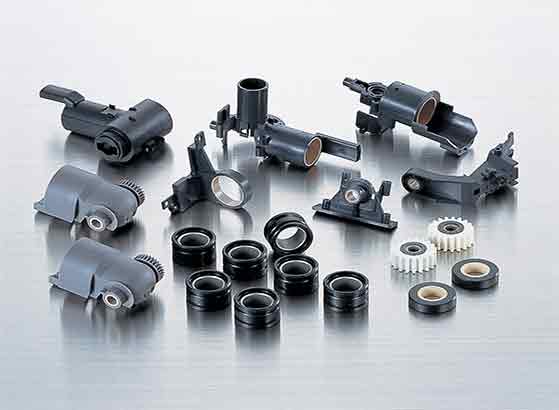
In overmolding, a soft-touch material is applied over a rigid plastic base. This creates comfortable grips, protective layers, sealing surfaces, and impact absorption zones. The process eliminates the need for adhesives or mechanical assembly, making the final product smoother, more durable, and more resistant to wear.
Insert molding, on the other hand, embeds metal parts, threaded inserts, or electronic components inside molded plastic. This produces a stronger and more stable structure than assembling separate pieces. The result is a part with reinforced strength, reduced overall weight, and improved dimensional accuracy.
In 2025, improved material selection plays a major role in overmolding success. Thermoplastic elastomers bond more effectively with polypropylene, ABS, nylon, and other base materials, creating stronger chemical adhesion. Improved material data lets engineers predict compatibility and reduce bonding issues.
Automation is another driver of growth. Robots now position inserts with higher precision, cutting down on misalignment and ensuring consistent seating inside the mold. Automated systems also handle secondary operations such as trimming or part inspection, speeding up production.
With greater accuracy, reduced labor, and improved durability, both overmolding and insert molding continue to help companies develop better-performing components with fewer assembly steps.